Your Guide to Planting a Natural Stone Wall Successfully
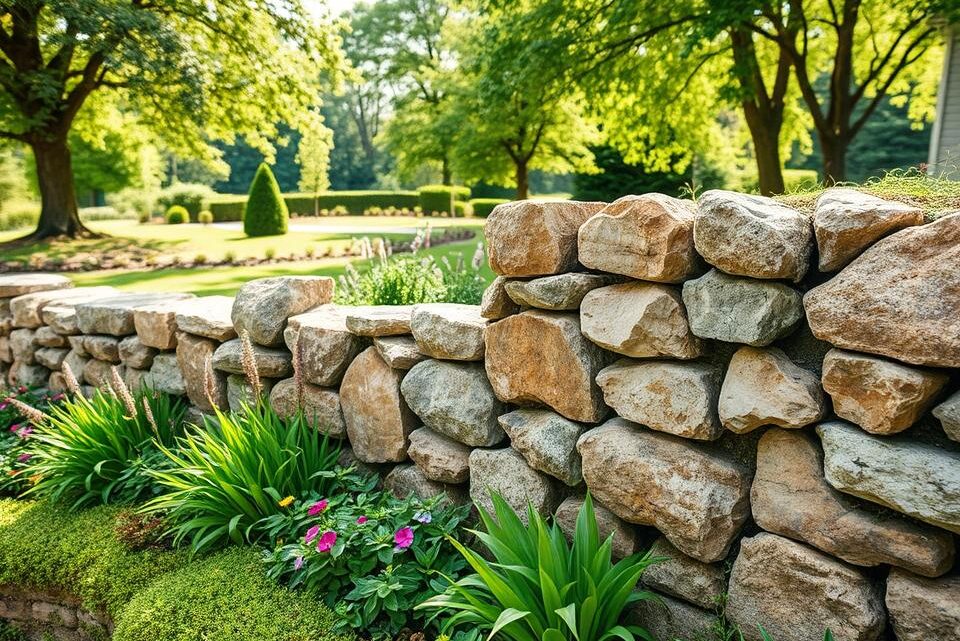
Creating a stone wall in your garden can be a rewarding project, enhancing both the aesthetic appeal and ecological balance of your outdoor space.
For centuries, stone walls have been a staple in British gardens, offering a blend of practicality and beauty. By incorporating plants into your wall design, you can create a unique feature that supports local biodiversity.
The right material selection and design approach are crucial for a successful outcome. This guide will walk you through the process, from choosing the right stones to achieving a harmonious balance between structure and plant life.
Inhaltsverzeichnis
Key Takeaways
- Understand the different types of stone suitable for your wall
- Learn how to select plants that thrive in a stone wall environment
- Discover the importance of design and material selection
- Gain insights into the tools and techniques used by professionals
- Find out how a planted stone wall can enhance your garden space
Understanding the Beauty and Benefits of Stone Walls
Incorporating a stone wall into your garden not only enhances its beauty but also provides numerous ecological advantages. Stone walls have been a defining feature of landscapes for centuries, serving various purposes from demarcating boundaries to creating visually appealing garden features.
Historical Significance
Stone walls have a rich history in British gardens, originally used for practical purposes such as containing livestock and terracing slopes. Their presence in garden design continues to be valued for their rustic charm and historical significance, connecting modern gardens to their past.
Ecological Value
The ecological benefits of planted stone walls are substantial. They create microhabitats for beneficial insects, small mammals, and reptiles. The open cracks in stone walls provide shelter for various species, while the plants growing in these walls offer essential food sources.
Aesthetic and Practical Functions
Beyond their ecological value, stone walls serve multiple practical functions, including slope stabilisation, garden zoning, and creating distinct areas within your outdoor space. The thermal mass of stone walls moderates temperature extremes, creating ideal environments for plants that might otherwise struggle to thrive.
| Benefits of Stone Walls | Description |
|---|---|
| Ecological Benefits | Create microhabitats for beneficial insects and small animals |
| Aesthetic Appeal | Enhance garden beauty with rustic charm |
| Practical Functions | Stabilise slopes, zone gardens, and moderate temperature extremes |
Types of Stone Walls Suitable for Planting
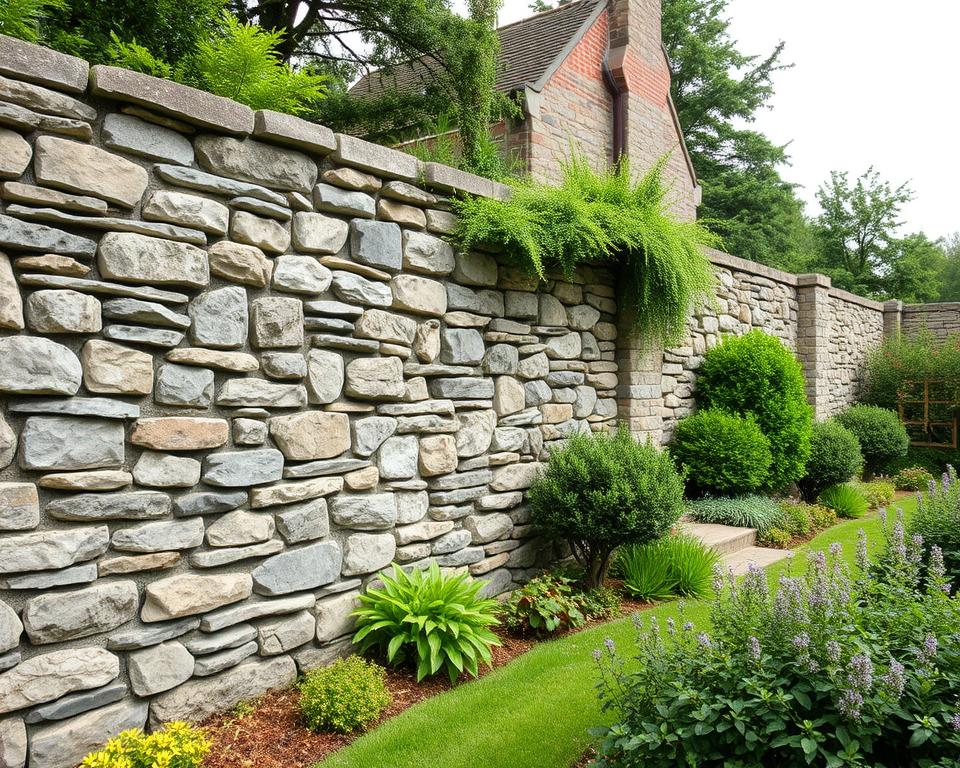
A planted stone wall can be a stunning addition to any garden, provided you select a suitable type that complements your landscape. The type of stone wall you choose will significantly impact both the construction process and the final appearance of your garden feature.
Dry Stone Walls vs. Mortared Walls
Dry stone walls are constructed without mortar, relying on the careful stacking and balancing of stones to create a stable structure. This method allows for planting in the natural crevices between stones, creating a seamless blend of stone and flora. In contrast, mortared walls use cement or lime mortar to bind the stones together, offering greater structural stability but requiring more deliberate planting pockets during construction.
Retaining Walls vs. Freestanding Walls
Retaining walls are designed to hold back soil on a slope, creating level areas in the garden. They provide excellent opportunities for planting due to the moisture and nutrients from the soil behind them. Freestanding walls, on the other hand, serve as boundaries or decorative features and can also be planted, though they typically require more careful water management as they don’t benefit from the moisture of a backed earth bank.
Natural Stone Options for British Gardens
British gardens can utilise various natural stone options, including limestone, sandstone, slate, and granite. Each stone type has different textures, colours, and properties that affect both construction methods and plant suitability. For example, limestone and sandstone are popular choices due to their workability and aesthetic appeal, while granite offers durability and a distinctive look.
When selecting stone for your wall, consider how the stone’s properties will affect water retention and drainage, as this directly impacts plant survival. Local stone varieties often work best as they harmonise with the surrounding landscape and are adapted to local soil and weather conditions.
Planning Your Planted Stone Wall Project
A well-planned planted stone wall project begins with understanding your garden’s needs. Before you start building, it’s crucial to plan your wall carefully, considering its purpose, location, and design.
Determining the Right Location and Size
When determining the location and size of your wall, consider factors such as sun exposure and existing drainage patterns. The wall’s size should balance practical needs with aesthetic proportions. A wall that’s too tall may overwhelm a small garden, while one that’s too short might not create the desired impact.
| Wall Height | Description | Suitable Garden Size |
|---|---|---|
| 0.5m (dwarf walls) | Ideal for small boundaries or decorative edges | Small gardens |
| 1m | Striking, cozy, and functional | Medium to large gardens |
Selecting Appropriate Stones for Your Climate
Selecting stones that are appropriate for your local climate is vital. Some stone types are more susceptible to frost damage or erosion in certain conditions. For instance, sandstone and limestone are popular choices in the UK due to their performance and aesthetic appeal.

Creating a Design That Accommodates Plants
The design of a planted stone wall differs from a standard wall, as you’ll need to incorporate planting pockets and ensure there are suitable places for plants to establish themselves. Consider how the wall will look throughout the seasons and from different viewpoints in your garden.
By carefully planning your planted stone wall project, you can create a beautiful and functional feature that enhances your garden’s beauty and character.
Essential Tools and Materials for the Job

Building a planted stone wall requires a variety of tools and materials to ensure a successful outcome. Having the right equipment is crucial for both the construction and planting phases of your project.
Stone Selection and Preparation Tools
For selecting and preparing stones, you’ll need a stone hammer and chisel to shape stones as necessary. Safety goggles are also essential to protect your eyes from flying debris. A measuring tape and string line help maintain proper dimensions and alignment.
Construction Equipment Needed
During construction, a spade is necessary for excavation, while a level ensures your wall remains straight. A rubber mallet is used to adjust stones into place, and heavy-duty gloves protect your hands from injury. A wheelbarrow is invaluable for transporting stones and soil around your site.
Planting Supplies and Soil Requirements
For planting, you’ll need a trowel, hand fork, and long-handled tweezers to place plants into tight spaces between stones. The soil should be a lean, free-draining mix of topsoil, sand, and some organic matter to prevent waterlogging.
Building the Foundation for Your Stone Wall
The key to a successful stone wall lies in its foundation, which must be carefully planned and executed. A well-built foundation ensures the longevity and stability of your wall, especially when you plan to incorporate plants, which add weight and moisture considerations.
Preparing the Ground and Excavation
To start, mark out the footprint of your wall using stakes and a string line, ensuring the line is straight or curves exactly as intended in your design. Then, excavate a trench approximately 300mm wide and at least 150mm deep for small walls; for taller structures, increase the depth to ensure stability. It’s crucial to keep the trench width consistent to support the wall and any coping overhang.
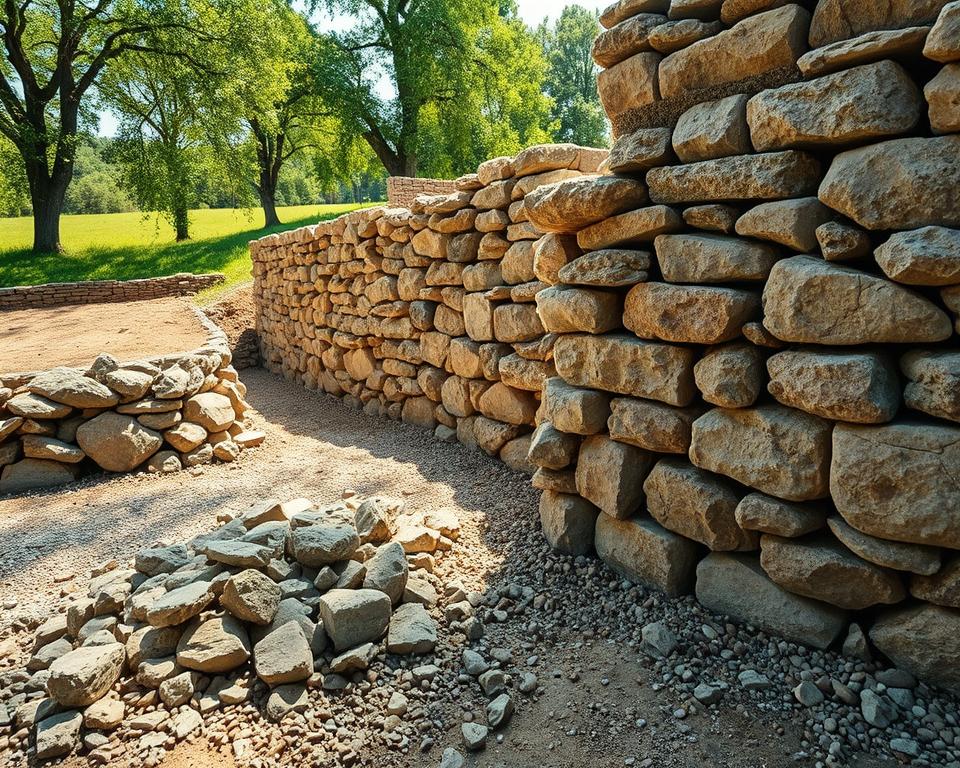
Creating a Solid Base with Proper Drainage
The base layer should consist of compacted hardcore material, such as MOT Type 1, which provides excellent drainage and spreads the load of the wall evenly. For planted walls, proper drainage is essential; consider incorporating a perforated drainage pipe at the base of retaining walls to prevent water buildup. Once your base is prepared, lay a concrete foundation approximately 100-150mm thick, ensuring it’s perfectly level across its entire length.
Setting Up the First Course of Stones
Allow the concrete to cure properly before beginning to set stones; rushing this step can compromise the entire structure. When laying the first course of stones, select your largest, flattest specimens to create a stable base upon which the rest of the wall will sit. Take extra time to ensure the first course is perfectly level, as any irregularities will be amplified as the wall grows taller. For retaining walls, the first course should be partially buried to provide additional stability against the pressure of the retained soil.
Planting a Natural Stone Wall: Step-by-Step Guide
Incorporating plants into your natural stone wall can enhance its beauty and ecological value. A well-planned planting strategy is crucial for the success of your stone wall.
Creating Planting Pockets During Construction
When building your stone wall, it’s essential to create planting pockets during construction. This involves leaving deliberate spaces between stones, approximately two fingers wide, to provide adequate room for plant roots. As you build each course of the wall, make sure to add a layer of appropriate soil mix into the joints where you plan to place plants, ensuring it’s packed firmly but not compacted.
- Leave spaces between stones for planting pockets.
- Add soil mix into the joints during construction.
- Ensure the soil is firmly packed but not compacted.
Soil Preparation for Wall Planting
The soil used for wall planting should be lean and free-draining. A mix of topsoil, horticultural grit, and a small amount of compost works well for most wall plants. This type of soil will help prevent waterlogging and root rot, ensuring your plants thrive.
Techniques for Installing Plants Between Stones
When installing plants, position them horizontally with the root ball pushed as deeply as possible into the joint to ensure good contact with the soil and stability. Make sure to fill any empty spaces around the plant with additional soil, gently firming it to eliminate air pockets without damaging delicate roots.
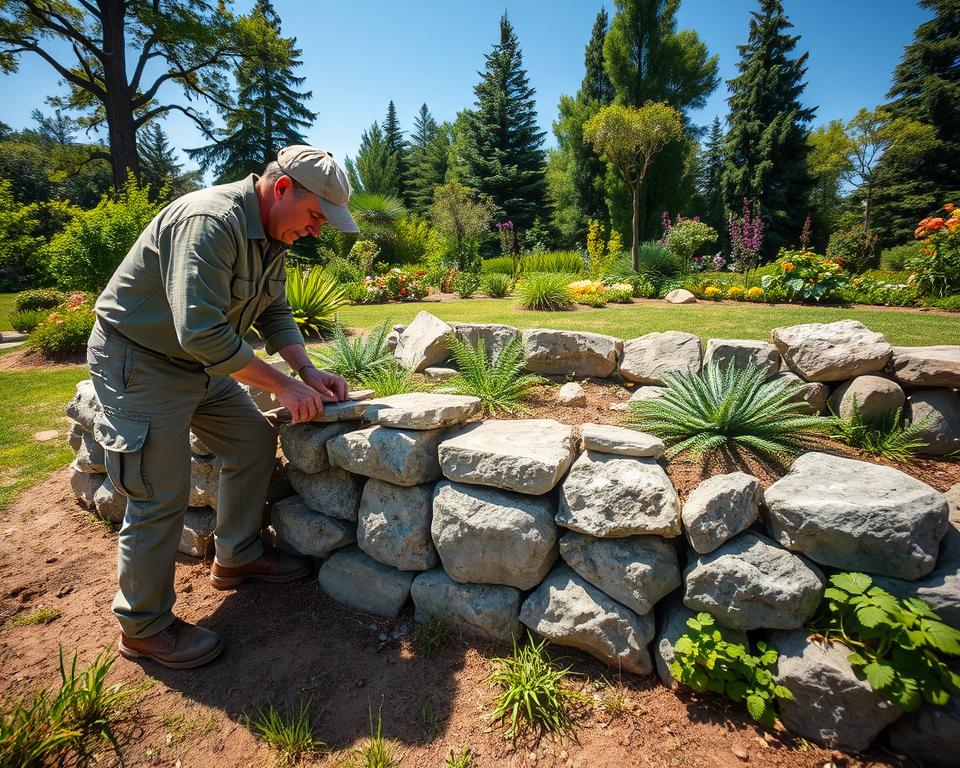
Adding Plants to Existing Stone Walls
If you’re adding plants to an existing stone wall, use a small trowel or stick to create planting holes in the joints, then carefully insert small plants or cuttings. For established walls, succulents with minimal root systems are ideal as they can be wedged into small cracks and will eventually take root and spread.
After planting, water your stone wall thoroughly but gently using a watering can with a rose attachment or a misting spray to avoid washing soil out from the joints. In the first two years after planting, continue to water your stone wall from time to time to help the plants establish themselves well.
Selecting the Perfect Plants for Your Stone Wall
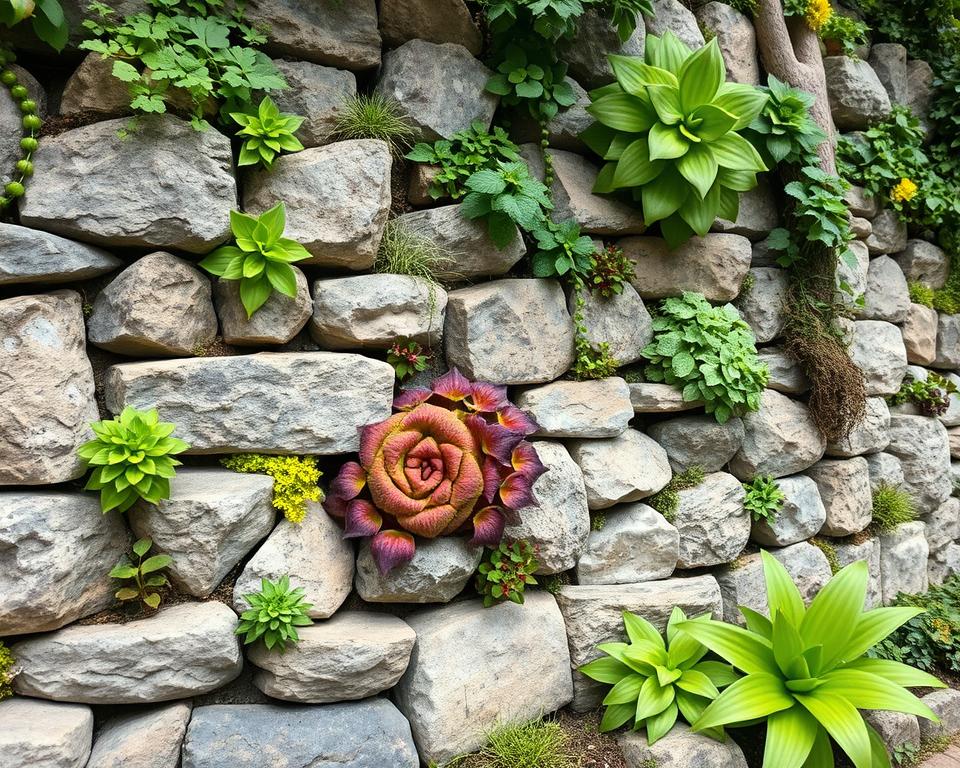
The success of your stone wall garden largely depends on selecting plants that thrive in its unique conditions. When choosing plants, consider factors such as sunlight exposure, soil moisture, and the wall’s construction type.
Drought-Tolerant Plants for Sunny Walls
For sunny walls, drought-tolerant plants with minimal root requirements are ideal. Consider Mediterranean herbs like thyme (Thymus) and rosemary (Rosmarinus officinalis), which benefit from the heat stones release at night.
Shade-Loving Options for North-Facing Walls
For north-facing or shady walls, choose shade-loving plants like Oxford ivy (Cymbalaria muralis), larkspur (Corydalis), or small fern species that appreciate the cooler, moister conditions.
Succulents and Alpine Plants for Stone Crevices
Succulents such as stonecrop (Sedum) and houseleek (Sempervivum) are perfect for stone wall planting as they store water in their leaves and can survive in minimal soil. Alpine plants like saxifrage (Saxifraga) and rock jasmine (Androsace) are also well-suited for stone crevices.
Herbs and Flowering Plants for Added Interest
Flowering plants like wall bellflower (Campanula portenschlagiana), lilacbush (Aubrieta), and creeping phlox (Phlox subulata) add seasonal colour and interest to stone walls. Consider mixing plants with different textures, colours, and flowering times to ensure your stone wall remains attractive throughout the seasons.
When selecting plants, consider their mature size and growth rate to ensure they won’t outgrow their space or destabilise the wall with excessive root development. By choosing the right plants for your stone wall, you can create a beautiful and thriving garden that enhances your outdoor space.
Maintenance and Care for Your Planted Stone Wall
Once your planted stone wall is established, maintaining it becomes a matter of routine care and occasional checks. A well-maintained wall not only adds beauty to your garden but also supports a variety of local wildlife, including insects that find shelter in the stone crevices.
Watering Strategies
Watering is most critical during the first two years after construction. After this period, most plants will have established a robust root system capable of surviving on natural rainfall. However, during extended dry periods, even established walls may require supplemental watering. Use a watering can with a rose attachment to gently water the plants without washing soil from between the stones.
Seasonal Maintenance
Seasonal maintenance is essential to keep your planted stone wall healthy. In autumn, remove any fallen leaves or debris that might smother small plants or cause excessive moisture retention. In spring, inspect the wall for any stones that may have shifted during winter and reposition them if necessary.
Managing Plant Growth
To prevent vigorous plants from overwhelming slower-growing specimens, occasional pruning is necessary. Make sure to remove any tree seedlings that may take root in the wall, as these can cause significant structural damage over time. Monitor the wall for signs of erosion or soil loss, adding additional soil mix as needed.
| Maintenance Task | Frequency | Purpose |
|---|---|---|
| Watering | As needed, especially during dry spells | To keep plants hydrated |
| Removing debris | Autumn | To prevent smothering of plants |
| Pruning | As needed | To manage plant growth |
| Inspecting and repositioning stones | Spring | To maintain structural integrity |
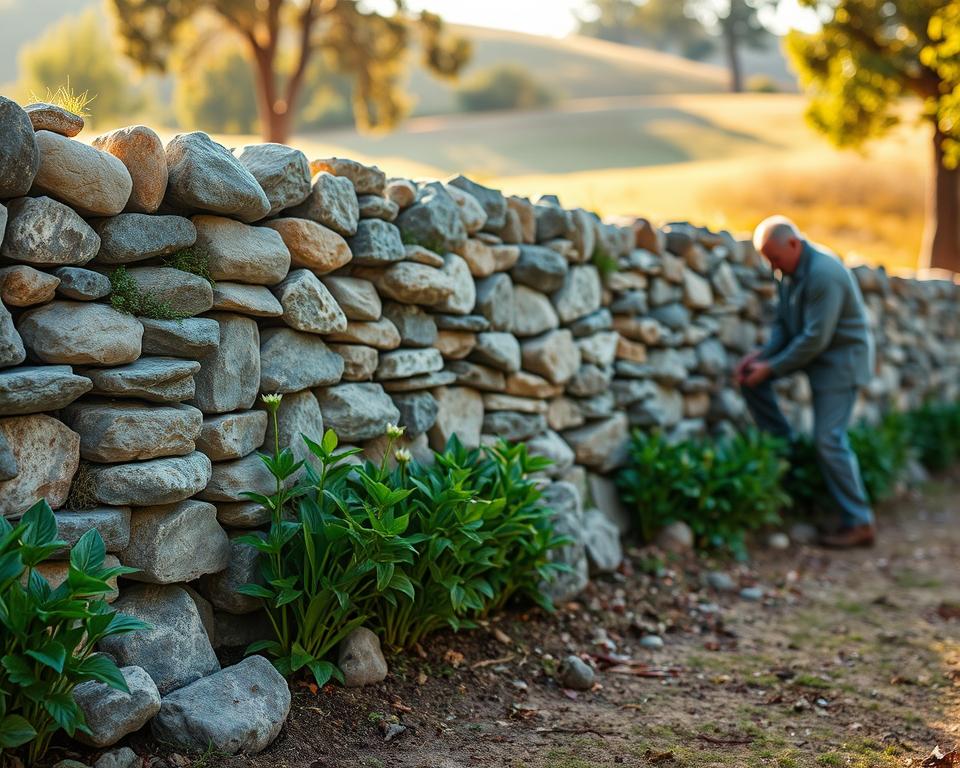
By following these maintenance tips, you can enjoy a thriving planted stone wall that enhances your garden’s beauty and supports local biodiversity.
Conclusion: Enjoying Your Living Stone Wall Creation
With your stone wall now complete, you can look forward to enjoying its evolving beauty for years to come. Your planted stone wall is more than just a boundary or structural element; it’s a living, evolving feature that will bring joy to your garden as it matures.
As plants establish themselves and spread along the joints and into gaps between stones, your wall will develop its own unique character. The top of your wall may become a favourite place to observe wildlife, such as birds, bees, and beneficial insects making their homes in and around the plants.
Take pride in the fact that you’ve created a valuable ecological habitat that supports biodiversity. Your stone wall will change with the seasons, offering different visual interest throughout the year.
FAQ
What type of stones are best suited for building a stone wall in a British garden?
The most suitable stones for a British garden are those that are locally sourced and can withstand the local climate. Options include sandstone, limestone, and granite, which are durable and blend well with the surroundings.
How do I ensure proper drainage when building a retaining wall?
To ensure proper drainage, you should install a drainage system at the base of the wall, such as a French drain, and use porous materials like sand or gravel to allow water to pass through.
What are the benefits of using dry stone walling techniques?
Dry stone walling techniques offer several benefits, including improved drainage, reduced maintenance, and a more natural appearance. This method also allows for flexibility and movement in the wall, reducing the risk of cracks and damage.
How often should I water the plants in my stone wall?
The frequency of watering depends on the type of plants, climate, and soil conditions. As a general rule, you should water plants regularly during the first growing season, and thereafter, only during periods of prolonged drought.
Can I add plants to an existing stone wall?
Yes, you can add plants to an existing stone wall. However, this requires careful planning and execution to avoid damaging the wall. You should select plants that are suitable for the wall’s conditions and use a gentle soil preparation technique to avoid dislodging the stones.
How do I prevent damage to my stone wall from plant growth?
To prevent damage, you should regularly inspect and maintain your stone wall, pruning or removing plants that are causing damage or becoming too invasive. You should also use a suitable soil mixture and avoid over-watering, which can lead to erosion or damage to the wall.